

What if you spent hours analysing your client's apartment... only to discover that the clue was never inside it?
In my previous post, I suggested that apartment Feng Shui should be examined from a more extensive perspective:
When analyzing an apartment, are we looking solely on the Small Tai Qi and overlooking the building?s Big Tai Qi?
Taking that thought one step further reveals an even more important point: What happens when people living in different parts of the same building begin experiencing patterns that, at first glance, appear completely unrelated?
- Different apartments.
- Different floors.
- Different layouts.
- Different directions.
- Different personal charts.
Yet when you step back and look at the bigger picture, something begins to recur.
That is where the real question begins.
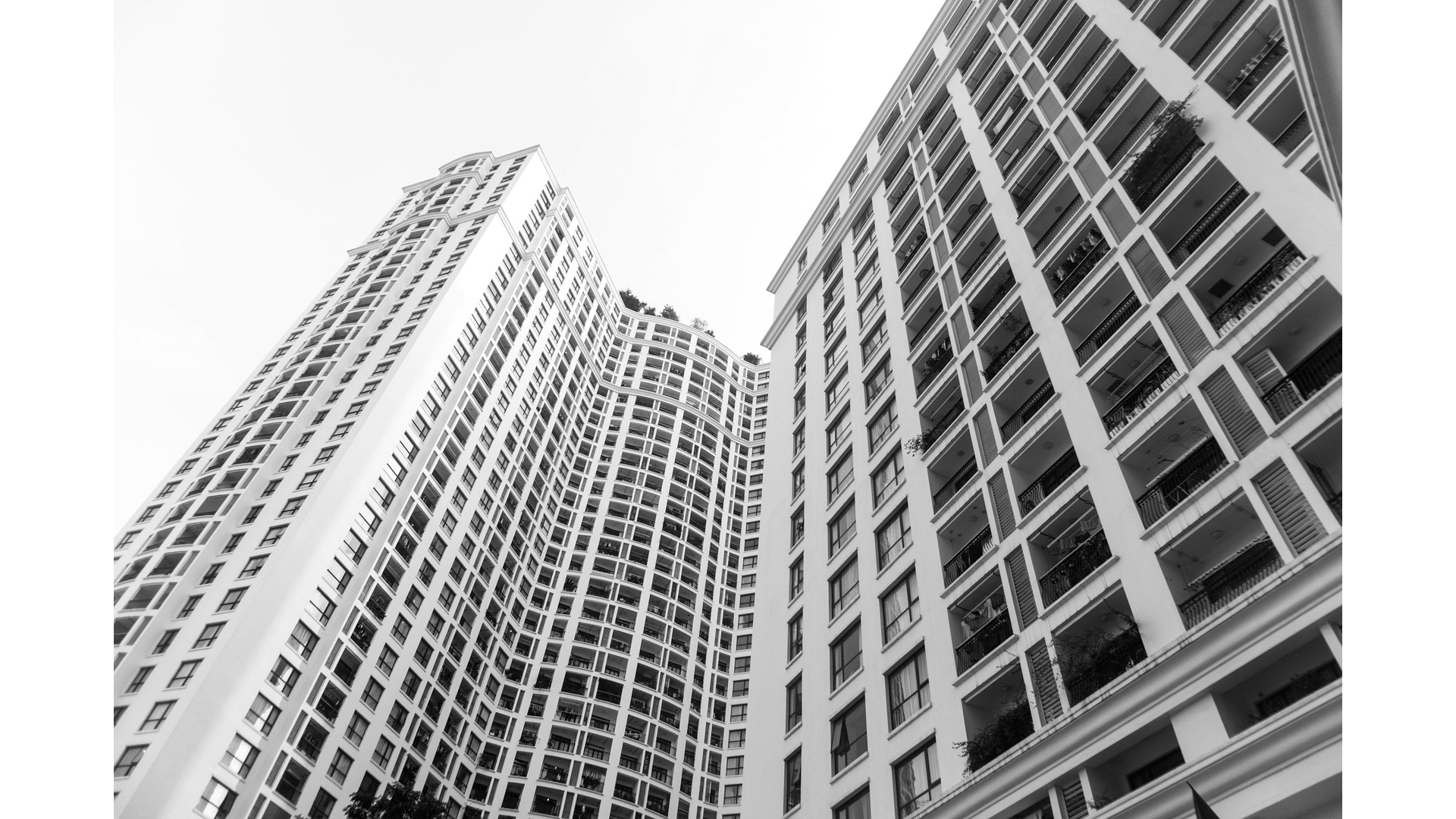
Every apartment has its own Small Tai Qi and its own individual characteristics. But no apartment exists independently of the structure that contains it. It is part of a larger building.
And from a Feng Shui perspective, that building has its own Big Tai Qi.
 This raises an important question for practitioners:
Can something occurring at the level of the larger structure become relevant to people living in different parts of that building, even when their individual apartments are not located in the same sector?
This raises an important question for practitioners:
Can something occurring at the level of the larger structure become relevant to people living in different parts of that building, even when their individual apartments are not located in the same sector?
I believe this possibility deserves serious consideration, especially when the unit analysis does not fully explain the client?s case.
Imagine receiving inquiries from several people living in the same residential complex. One is struggling with career instability. Another is under financial pressure. Someone else is going through an unexpected change in family life.
Individually, these cases may seem unrelated.
But what if the apartments aren't the only common factor?
What if the building itself deserves a closer look?
This is why I see Big Tai Qi as a practical diagnostic layer, not just a theoretical concept.
A client may approach you with a personal problem. You analyze the apartment, examine the relevant charts, and recommend the appropriate remedies.
But what happens when the case continues to raise questions?
The instinct is often to re-examine the apartment for overlooked details.
Sometimes, that is exactly what needs to be done.
However, sometimes practitioners should consider a different question:
?Am I looking in the wrong place??
The issue may not originate within the apartment.
Perhaps something in the larger structure or environment deserves investigation.
This is where observing a collective pattern can become useful.
I would like to share an example from my practice.
One of my clients and his family were going through a significant period of transition. Shortly after their child's birth, the husband received a transfer to a remote location, making it impractical to relocate the entire family.
His wife and their infant therefore moved to another city, where she could receive support from her relatives. They moved into an apartment that the husband?s parents had purchased some time earlier, and that had remained vacant for nearly a year.
Before moving in, the family contacted me for a Feng Shui consultation, primarily to support the health and general well-being of the occupants.
After the initial recommendations were implemented, the husband began evaluating opportunities that might allow him to leave his current job and reunite with his family.
However, despite repeated attempts, nothing worked out.
The family reached out for further assistance.
During the next consultation, we explored the situation from the perspective of career and job opportunities. New possibilities did arise, but none of them were convincing enough for him to leave his existing employment.
The concern persisted.
Then, during one of our conversations, his wife mentioned something casually.
She had become acquainted with several women in the apartment complex who were also living without their husbands.
That immediately made me curious.
I asked:
?Is there a reason so many of the husbands are living away from their families??
Her response changed the direction of the investigation, because it suggested a pattern that spanned beyond one household.
In several cases, the husbands had moved to other locations for work. Some residents had reportedly lost employment after moving inside the complex and later relocated alone to other cities to earn a living and support their families.
At that point, my client?s situation no longer appeared to be an entirely isolated case, which made the larger building worth examining.
I decided to step back from the individual apartment and examine the Big Tai Qi of the larger property.
From the Feng Shui framework I was applying, one feature immediately stood out:
The central area of the overall apartment complex was missing.

This did not prove the structural feature caused the residents? experiences, and isolated observations should not be considered conclusive evidence.
However, the recurring pattern of primary earners living apart from their families became a significant clue connecting the case to the larger property.
I continued asking questions.
Were there other primary earners in the complex facing major disruptions?
The client mentioned two cases she knew of. One individual had been seriously affected following an accident, while another had experienced a severe recurrence of a serious autoimmune condition.
Again, these events can have numerous personal, medical, and circumstantial causes. They should never be attributed solely to Feng Shui.
For me, the conversation?s significance was different.
The pattern justified broadening the investigation.
This demonstrates the practical value of Big Tai Qi in such cases.
You are not attempting to study the lives of every resident in the building.
You are not interfering in their personal circumstances.
You are simply gathering information that may clarify your client?s case.
Are similar patterns appearing around the client?
Could a structural feature of the larger property be relevant?
Is there something happening beyond the Small Tai Qi that deserves investigation?
Sometimes, the answer will still lie entirely within the individual apartment.
But sometimes, the client?s situation may be the first clue pointing towards a much larger picture.
For aspiring practitioners, this is an important skill to develop.
Premium practice is not necessarily about giving more remedies. Sometimes, it is about asking better questions before giving any remedy at all.
At this point, Big Tai Qi becomes more than a theoretical concept.
It serves like a practical lens for examining challenging or unresolved client cases from a new perspective.
Sometimes, the most valuable clue is not within the client?s apartment.
It may be found in the larger structure.
One Question I?m Genuinely Curious About
If you realized that an important Feng Shui clue might exist beyond the perimeters of your client?s apartment, how confident would you feel investigating it?
A. Very confident?I already include the larger environment and compass sectors in my analysis.
B. Reasonably confident, although I need more experience applying this in real cases.
C. I understand the concept of Big Tai Qi, but I am still unsure how to investigate it thoroughly.
D. My analysis is currently focused mainly on the individual property, and I have not explored this level in depth.
E. This makes me realize that I may need to look beyond the apartment more often.
Which answer reflects your current level of practice most honestly?
Drop A, B, C, D, or E in the comments.
I?m genuinely interested in understanding how confident practitioners feel about moving beyond the four walls of an apartment when a client?s case does not appear to tell the complete story.
Perhaps the key question is not whether we know enough Feng Shui, but whether we recognize when to broaden our inquiry and interpret the larger context.
Disclaimer: Situational correlation in analysis is always preferable to mere replication of the interpretations in the above example. This example is based on a true incident and published with due permission taken from the actual client. The method of analysis shown above reflects one of the instances taught in Tian Di Ren Academy. To get more insight of analysis of our academy do keep an eye on the official website of our Academy. The chart has been plotted in Chinese Metasoft.