
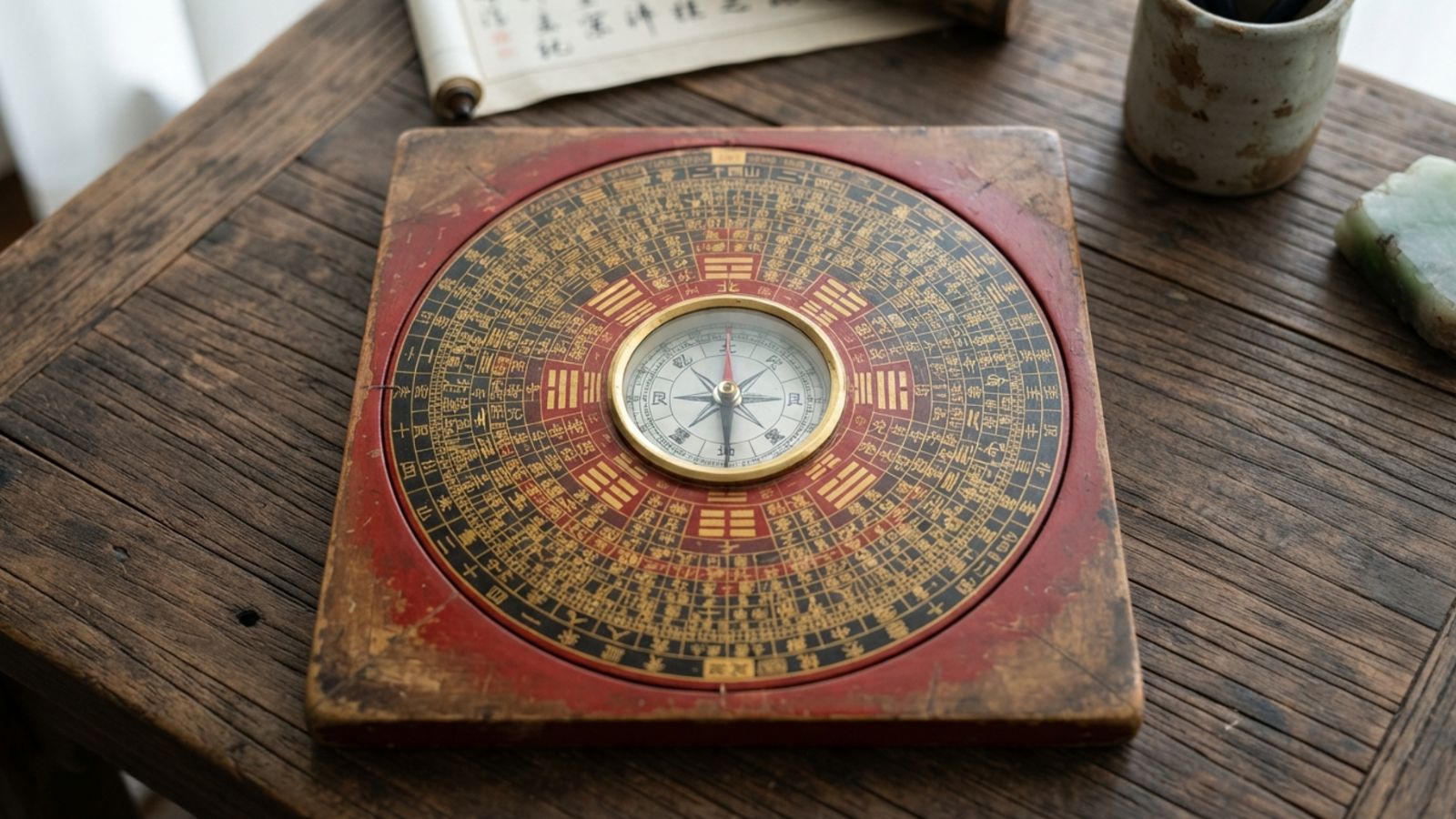
You have done all that you knew how to do and yet still do not know why the result is not appearing.
- The entrance has been looked at.
- The rooms have been assessed.
- The necessary calculations have been made.
- Recommendations are given.
- The remedies are put in place.
- And then comes the question that many practitioners have quietly faced:
Why is the situation still not unfolding the way we expected?
It by no means follows that Feng Shui has failed, and no practitioner should offer a guarantee as to the result. Since human life is influenced by a number of factors, situations, and decisions, it is part of our duty as practitioners to make clear to clients what Feng Shui does and what it cannot do, and to establish reasonable expectations. When we are open and ethical in our communication we help to preserve trust and promote a professional relationship.
But when an expected shift does not appear?or when an unexplained pattern continues?it may be worth asking:
Have we limited our investigation to too small an area?
This is a question I believe deserves greater attention in apartment Feng Shui.
Looking Beyond the Apartment Floor Plan
When a client approaches us with a floor plan, the natural starting point is the apartment itself.
We look at the entrance.
The internal layout.
The directions and sectors.
But an apartment does not exist independently of its surroundings.
It occupies a position on a floor.
That floor belongs to a larger building.
And the building itself exists within an external environment.
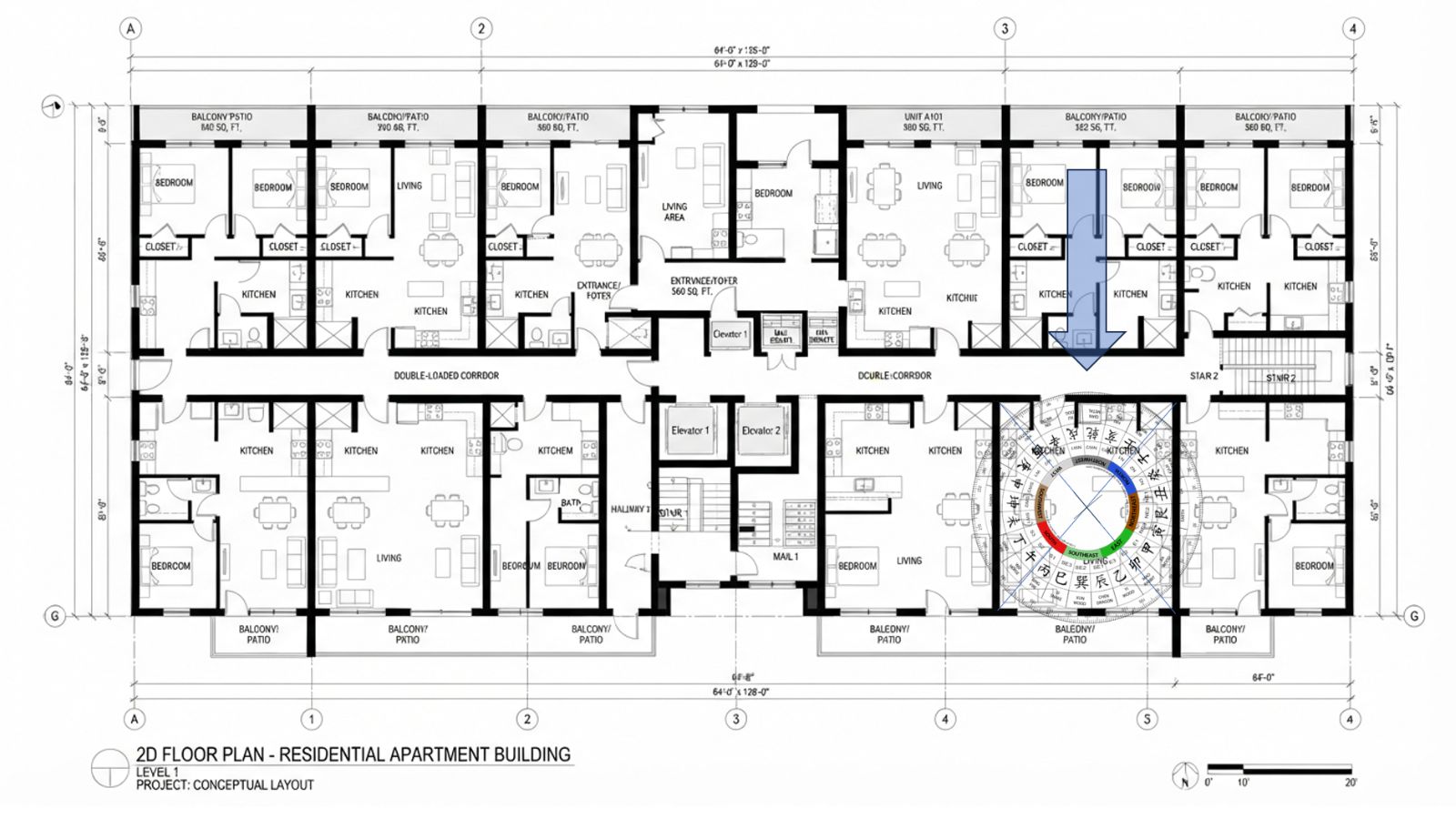
This is where the relationship between Small Tai Qi and Big Tai Qi becomes important.
Understanding Small Tai Qi and Big Tai Qi
The apartment can be understood as having its own Small Tai Qi. At the same time, it occupies a specific position within the larger Tai Qi of the building?the Big Tai Qi.
That means our investigation may sometimes need to move beyond the question:
What is going on in this apartment?
and expand towards:
What is the broader structure that this apartment belongs to and what is taking place in that larger setting?
The building's shape and alignment, as well as its position in relation to the roads and the adjacent buildings and the developments on or near the property, can all contribute an additional aspect to the practitioner's investigation.
For someone aspiring to practice Feng Shui professionally, this is not simply another concept to memorise.
It can alter the way you think about a case.
Instead of treating every consultation as an apartment-level investigation alone, it may sometimes be useful to follow a broader sequence:
- Observe the environment.
- Understand the building.
- Then investigate the individual unit.
This does not mean every consultation needs to become more complicated.
Sometimes, professional growth is simply about knowing when the problem requires you to step back before you look closer.
An Experience from My Feng Shui Practice
Let me share an experience from my own practice.
One of my long-term clients had been living in an apartment with her family for several years. We had previously conducted a Feng Shui assessment and implemented the recommendations we considered appropriate. We also maintained regular quarterly follow-ups.
Over time, however, a pattern began to stand out.
Almost every year, around September, she experienced a skin-related health issue.
Initially, the problem was temporary and responded to medical treatment. But over the following years, the episodes became increasingly persistent.
Naturally, we returned to the original analysis.
We reviewed the apartment.
We checked whether the recommendations had been maintained.
As far as we could determine, the remedies were still in place.
At that point, we decided to widen the investigation.
Rather than focusing just on the client's apartment, we looked at the Big Tai Qi of the whole building.
What We Discovered in the Building?s West Sector
That was when we noticed something that had changed.
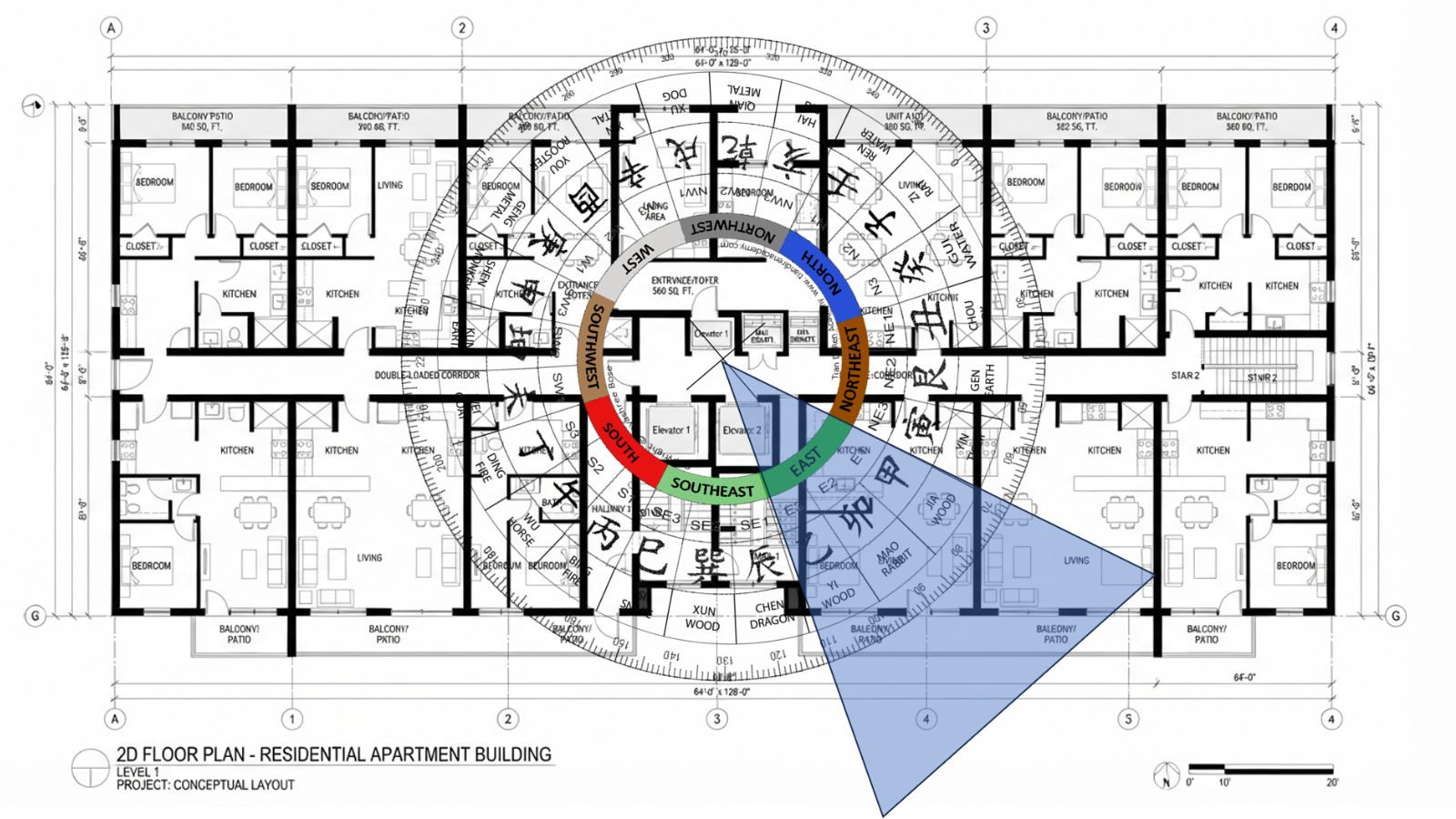
A section of the building's West sector, specifically within the West 2 mountain area, was being used as a temporary garbage storage location.
The apartment complex was still in the process of being developed and the waste-disposal area intended for use had clearly become inadequate. For now, the building's management had started to use this extra site, and it had stayed in use for about two years.
In the Feng Shui approach that we were using, this became immediately relevant.
Within that system West 2 is connected with matters relating to the skin.
For us, this did not automatically prove cause and effect. But it presented a pattern that deserved further consideration.
Might a change at the Big Tai Qi level have brought about a factor which was not visible during our concentration on the client's individual apartment?
By no means should one instance be considered as definitive proof. Since a health condition may have medical, environmental, or other causes, Feng Shui must never take the place of proper medical treatment or diagnosis.
But this experience reinforced an important lesson in my practice:
Even if you carry out a thorough analysis of an apartment you may still fail to notice something since the pertinent clue is not inside the apartment.
The Practitioner?s Role in a Feng Shui Investigation
It is here that the practitioner's role becomes particularly interesting.
Usually, clients let us know what they would like us to analyse.
Yet the professional value can be found in identifying other areas that should be looked into before reaching a conclusion.
The apartment is only one part of the picture.
Sometimes, the clue is within the Small Tai Qi.
Sometimes, the answer may require us to examine the Big Tai Qi.
At times, if we understand the interaction between the two things the course of our entire investigation may be altered.
Your apartment is not an island.
It is part of a more extensive structure, situated within a broader environment and, from the point of view of Feng Shui, within a more extensive energetic context.
Perhaps the next stage of apartment Feng Shui practice is not simply becoming better at analysing the floor plan.
Perhaps it is learning to recognise when the floor plan is not the whole story.
One Question I Would Genuinely Like to Ask the Practitioner Community
Have you ever completed a Feng Shui audit, implemented the recommended remedies, and later found that the situation still did not unfold as you had anticipated?
When That Happens, What Is the FIRST Area You Would Investigate Further?
A. Check the original analysis, the calculations and the assumptions once again.
B. Verify that the remedies were carried out correctly and had not been disturbed.
C. Examine the changes in the broader environment and those of the building's Big Tai Qi.
D. Examine the client's personal factors, timing and other metaphysical influences.
E. Carry out a structured troubleshooting procedure in order to spot anything that may have been overlooked.
Which One Would You Investigate First?
Drop A, B, C, D or E in the comments.
I am genuinely interested in understanding how practitioners approach cases where the original analysis appears complete, yet the outcome still raises unanswered questions.
The responses may reveal something important about the current practitioner ecosystem:
Do we need more formulas?or do we need a better framework for knowing where to look when the first analysis does not provide the complete answer?
Disclaimer: Situational correlation of analysis is always preferable over mere replication of interpretations done in the above example. This example is based on a true incident and published with due permission taken from the actual client. The method of analysis shown above reflects one of the instances taught in Tian Di Ren Academy. To get more insight of analysis of our academy do keep an eye on the official website of our Academy. The chart has been plotted in Chinese Metasoft.